T-shirt printing: the methods compared
Textile printing is not all the same: depending on the method, durability, color rendering, feel and price per piece differ considerably. Here's your overview of the most important methods — with an honest take on when each one is worth it.
Screen printing: the classic for large runs
In screen printing, ink is pushed through a fine mesh directly onto the fabric — one screen per color. It delivers strong, extremely durable prints and is unbeatably cheap per shirt at high quantities. The catch: the screens have to be made first. For single pieces or many different designs the setup isn't worth it — screen printing shines from medium to large runs with few colors.
Digital printing (DTG): photo designs straight onto fabric
Direct-to-garment printing works like an inkjet printer directly on the textile. It handles photorealistic designs with fine gradients and no screen setup costs — ideal for single pieces with complex, colorful designs, best on cotton.
Transfer printing: flexible from single pieces to medium runs
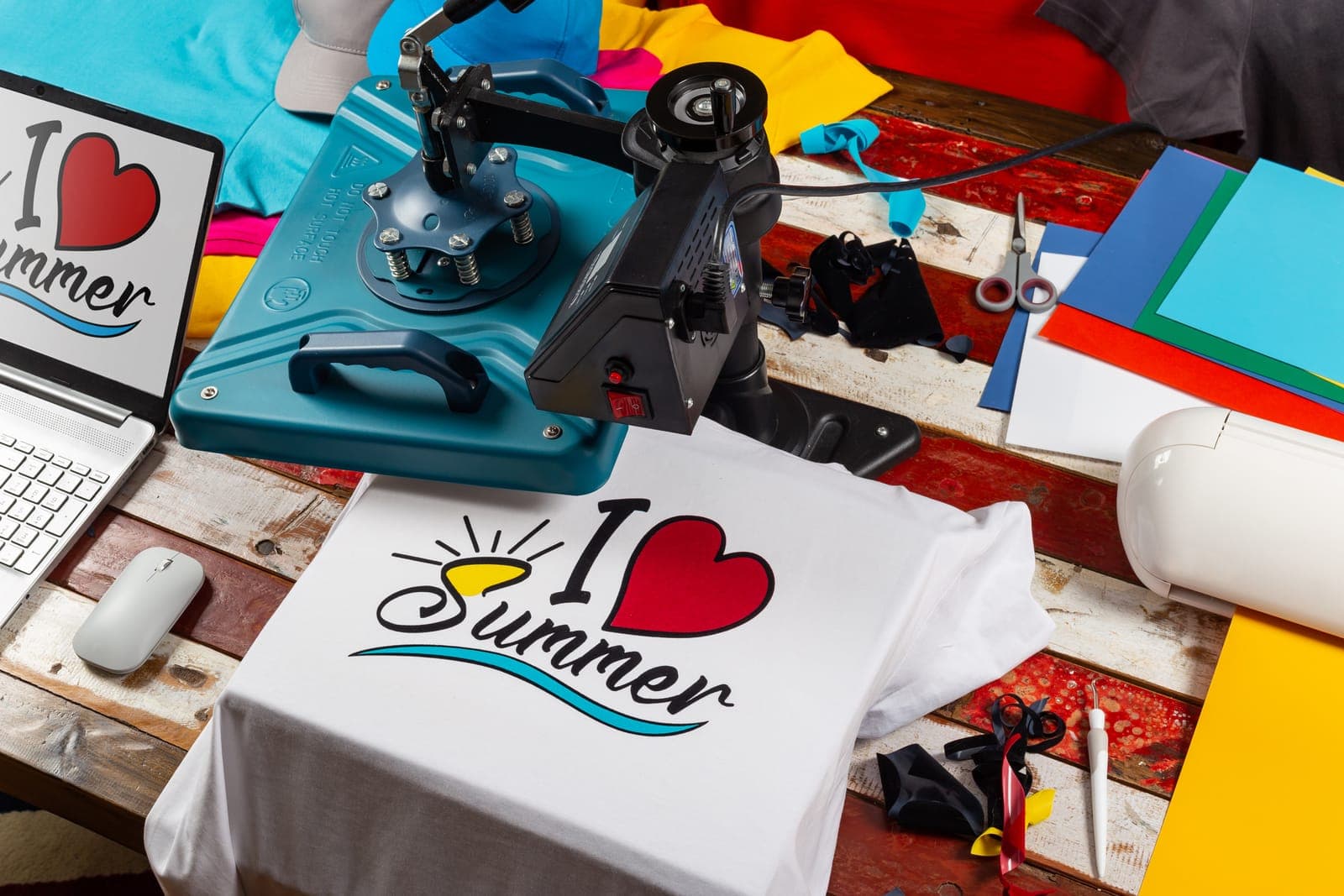
In transfer printing the design is first printed onto a special foil, cured, and then transferred onto the textile with a heat press under controlled temperature, pressure and time. The result: precise details, strong colors and a print that stays flexible and doesn't add bulk — and the method works on very different textiles, from t-shirts to hoodies to fabric bags.
This is our method, too: see how your design travels from screen to textile step by step on our professional textile printing page.
Sublimation: brilliant colors on polyester and mugs
In sublimation, color transitions into the surface itself under heat — it doesn't sit on the material, it's inside it. That makes for extremely durable, brilliant prints, but only works on light polyester textiles and coated surfaces. Which is exactly why we use it for our printed mugs.
Flex and flock foil: for lettering and numbers
Here the design is cut from colored foil and heat-pressed on — flex smooth and glossy, flock velvety and raised. Perfect for names, numbers and single-color logos (think jerseys), but unsuitable for photos and gradients.
What does this mean for your project?
- A single piece with a photo or colorful design: transfer printing or DTG
- Club shirts with names and numbers: flex foil, combined with a printed logo
- Large run, few colors: screen printing
- Polyester sports shirts, full coverage: sublimation
You don't have to decide alone: send us your design and tell us how many shirts you need — we'll honestly recommend the right method. How to prepare your file is covered in our guide on print-ready files.
Upload your design & get adviceFrequently asked questions
Which method suits a single shirt?
Transfer printing or digital printing (DTG): both work without screen setup costs and handle photos and colorful designs – the first choice for single pieces.
When is screen printing worth it?
From medium to large runs with few colors. The screens have to be made first – but at high quantities the price per shirt is unbeatable.
Which textile print lasts longest?
Screen printing and sublimation are extremely durable, though sublimation only works on light polyester. Our transfer print is applied under controlled temperature and pressure and survives far more washes than quick methods.